WHO Releases Third Edition of Its TB Drug-Resistance Mutation Catalogue: What You Need to Know
November 23, 2026 · 4 min read
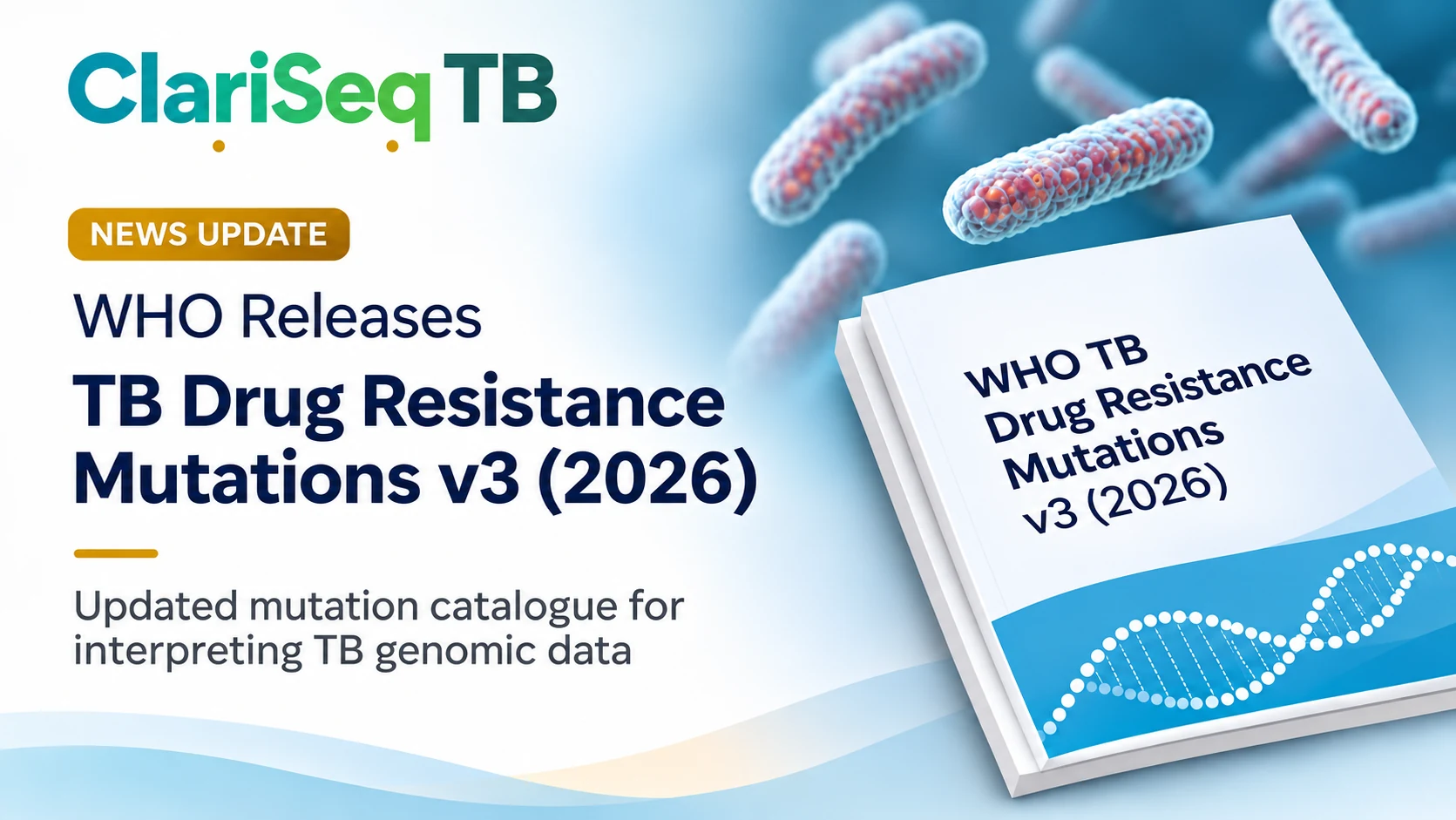
The World Health Organization (WHO) has released the third edition of its catalogue of genetic mutations linked to drug resistance in mycobacterium tuberculosis (TB). The mutation catalogue serves as a reference list that helps laboratories to identify and understand from the genetic code of a TB sample which medicines are unlikely to work against the infection. The new version draws on more data than any previous edition and adds information on several newer TB medicines. This article explains what the catalogue is, what has changed and why it matters.
At a glance
- More data: The new edition is based on studies conducted on more than 71,000 TB samples from over 75 countries. WHO reports this scale of samples is about 37% more data than the 2023 edition.
- Newer medicines: The 2026 catalogue includes expanded information on Bedaquiline, Linezolid, Delamanid, Pretomanid and Cycloserine which are increasingly used to treat drug-resistant TB.
- Revised methods: WHO says it has updated the statistical methods used to classify mutations.
- More guidance: The release comes with additional guidance and a new set of frequently asked questions.
Why testing for drug-resistant TB matters
Drug-resistant TB occurs when the mycobacterium that cause TB stop responding to one or more of the medicines used to treat it. According to WHO's Global Tuberculosis Report 2025 multidrug- or Rifampicin-resistant TB (MDR/RR-TB) caused an estimated 150,000 deaths worldwide in 2024. WHO also notes that fewer than half of people with drug-resistant TB have access to treatment.
Identifying resistance early helps doctors choose effective medicines sooner. Traditional testing involves growing the bacteria in a laboratory and exposing them to different drugs which can take weeks. Molecular diagnostics such as sequencing read the bacteria's DNA directly and can produce results faster. However, those results are only useful if there is a reliable way to interpret what each genetic change means.
What is the mutation catalogue?
The catalogue lists genetic changes (mutations) found in TB bacteria and grades each one by how strongly it is linked to resistance to a particular drug. Some mutations are clearly linked to resistance, some are clearly not and others remain uncertain because there is not yet enough data to establish their link with drug's efficacy.
A shared reference means that laboratories in different places can reach the same conclusion when they find the same mutation. The catalogue is also used by companies developing TB tests and by researchers and public health programmes that track drug resistance.
How the catalogue has evolved
Samples behind each edition of the WHO catalogue
Table 1. The three editions of the WHO catalogue
| Edition | Year | Data used | Notable points |
|---|---|---|---|
| First | 2021 | 41,137 samples | Covered 13 TB medicines |
| Second | 2023 | 52,000+ samples from 67 countries | Added the first resistance markers for Bedaquiline and more for Linezolid and Delamanid |
| Third | 2026 | 71,000+ samples from 75+ countries | More data on newer medicines, updated methods, additional guidance and FAQs |
Source: WHO catalogue editions (2021, 2023, 2026).
Each edition has grown as more samples with both genetic and laboratory test results have become available allowing more mutations to be classified.
What has changed in the third edition
More data from more countries
The new edition is based on more than 71,000 samples from over 75 countries contributed by national TB programmes, reference laboratories, universities and technical partners. A wider geographic spread matters because TB bacteria and their mutations vary from region to region and rare mutations can only be classified once enough examples have been collected.
More information on newer medicines
Bedaquiline, Linezolid, Delamanid, Pretomanid and Cycloserine now play a central role in treating drug-resistant TB but earlier editions had limited data on them. Laboratory testing for some of these drugs is also difficult which makes genetic information about them useful for early monitoring and resistance detection.
Table 2. Newer medicines with expanded information in the 2026 edition
| Medicine | Launched | What it does |
|---|---|---|
| Bedaquiline | Approved in the US in December 2012 | The first new TB medicine in more than 40 years. It blocks an enzyme the TB bacterium needs to make energy (ATP synthase) so the bacterium cannot survive. |
| Linezolid | Approved in 2000 as an antibiotic and later adopted for drug-resistant TB | It stops the bacterium from building the proteins it needs by binding to its ribosome. It is now a core part of newer all-oral regimens. |
| Delamanid | Approved in the EU and Japan in 2014 | It blocks the making of mycolic acids that form the TB cell wall. It is used for multidrug-resistant TB when other regimens cannot be used. |
| Pretomanid | Approved in the US in August 2019 | It damages the cell wall and releases substances toxic to the bacterium. It is used with Bedaquiline and Linezolid in a short oral regimen. |
| Cycloserine | In use against TB since the 1950s | It blocks the building of the bacterial cell wall. It is an older reserve medicine now given with newer drugs for resistant TB. |
Updated methods
To judge whether a mutation is linked to resistance researchers compare each sample's genetic data with its laboratory drug-test results and use statistical analysis to measure how strong that link is. For this edition WHO has revised these analysis methods and the full details are published on WHO site.
A broader approach to interpretation
The WHO statement says that its list of graded mutations should not be used on its own. Whether a mutation leads to resistance can depend on other genetic factors so the list is intended to be used alongside a set of additional rules typically built into specialised analysis software. According to WHO the aim is to make results more consistent between laboratories.
How the catalogue is used to read a sequencing result
Additional guidance
The release also includes further guidance and a new set of frequently asked questions for people using the catalogue.
Who uses the catalogue?
- Laboratories that use genetic sequencing to test TB samples for drug resistance.
- Test developers designing sequencing-based TB tests and analysis software.
- Public health programmes that monitor drug resistance across countries and over time.
- Researchers studying TB genetics and drug resistance.
Conclusion
The third edition of the TB mutation catalogue is built on a larger and more geographically diverse dataset than earlier versions with more information on newer TB medicines and updated guidance on how mutations should be interpreted. As molecular diagnostics for TB become more widely used shared references like this shape how results are read and compared between laboratories. The catalogue has been updated three times since 2021 and further editions may follow as more data is collected.
Sources
- WHO, Catalogue of mutations in Mycobacterium tuberculosis complex and their association with drug resistance, 3rd ed. (publication page): https://www.who.int/publications/i/item/9789240124653
- WHO news release, 10 November 2026: https://www.who.int/news/item/10-11-2026-who-updates-global-catalogue-for-interpreting-tuberculosis-drug-resistance-mutations
- WHO, Catalogue of mutations, 2nd ed. (2023): https://www.who.int/publications-detail-redirect/9789240082410
- Walker et al., The 2021 WHO catalogue of MTBC mutations associated with drug resistance, Lancet Microbe 2022: https://www.ncbi.nlm.nih.gov/pmc/articles/PMC7612554/
- WHO Global Tuberculosis Report 2025, drug-resistant TB: https://www.who.int/teams/global-programme-on-tuberculosis-and-lung-health/tb-reports/global-tuberculosis-report-2025/tb-disease-burden/1-3-drug-resistant-tb
See it on your own sequencing data
Start a free trial, or talk to the team about fitting ClariSeq TB into your workflow.